Tired of Being Tired? Let's Talk About Why
When the coffee doesn't do the trick anymore....

I reached for the coffee pot and stared in disbelief.
Empty.
Again.
I let out a frustrated sigh. It was only 10:00 in the morning, and I had already finished an entire pot of coffee by myself.
The worst part?
I couldn't feel a thing.
No energy. No focus. No motivation.
Nothing.
For a brief moment I wondered if I had accidentally bought decaf, so I grabbed the bag and checked.
Nope.
My regular Folgers Breakfast Blend. (please don't judge my coffee choices, they are better now haha)
As I stood there waiting for the caffeine to work its magic, I remember thinking, "Something must be seriously wrong with me."
Everything felt heavy.
My body moved through the day as if I were walking through wet cement. Even the simplest tasks felt exhausting. It wasn't the kind of tiredness that comes after a long week or a late night.
This was different.
This was a deep, soul-crushing exhaustion that never seemed to go away.
Eventually, I called my doctor.
"I'm tired of being tired all the time," I told him. "Please help me."
Blood work was ordered.
A few days later, the nurse called.
"Everything looks normal."
And that was it.
No follow-up.
No explanation.
No answers.
For years I repeated this cycle.
I complained of fatigue.
Doctors ran tests.
The tests came back "normal."
The conversation ended.
Eventually, one doctor gave me a diagnosis of fibromyalgia. Looking back, I realize it wasn't based on much more than the fact that nobody could figure out what was wrong. Along with the diagnosis came medications, including SSRIs.
At one point, my doctor admitted that part of prescribing them was simply to see if the problem was psychological.
In other words, maybe it was all in my head.
I can't tell you how many times that message was delivered over the years—sometimes directly, sometimes indirectly—but always with the same implication:
Nothing physical is wrong with you.
You're just stressed.
You're depressed.
You're anxious.
You're imagining it.
Because of the fibromyalgia diagnosis, I qualified for multiple university studies and treatment programs. I tried medications. Exercise programs. Psychotherapy. Cognitive Behavioral Therapy.
I was willing to try anything.
Nothing helped.
After nearly a decade of searching, testing, experimenting, and enduring side effects from treatments that never addressed the problem, I finally stopped looking.
I accepted what I thought was my fate.
This was just going to be my life.
Tired.
Exhausted.
Dragging myself through each day.
Then one Sunday after church, someone handed me an article.
"Hey," they said, "you might find this interesting."
The article discussed research suggesting there may be a real, measurable cellular issue behind chronic fatigue.
To be honest, the study itself didn't provide many practical answers.
But it did something far more important.
It cracked the door open.
For the first time, I saw evidence that maybe fatigue wasn't simply a character flaw, a lack of motivation, depression, or something I had imagined.
Maybe there was a real physical reason behind what I was experiencing.
That small spark of hope changed everything.
Years later, after countless hours of research, education, and digging deeper into root-cause health, I finally discovered something that had been overlooked for years.
A virus I had contracted long before my symptoms began was still active in my body.
I asked a physician to test for it.
The results came back positive.
Finally, I had an answer to the question of what was contributing to my fatigue.
But discovering the cause was only the beginning.
The next question became:
How do I help my body heal?
That journey taught me something I wish someone had told me years earlier:
Fatigue is rarely just about being tired.
It's often about energy production itself.
And that energy story begins inside the cell.
Fatigue Frustrating You? Let's Get Free of That.
Are you tired of being tired?
Maybe you've had labs run. Maybe you've been told everything looks normal. Maybe you've tried more coffee, more supplements, more sleep, or more willpower.
Yet the fatigue remains.
If this sounds familiar, you're not alone.
Fatigue is one of the most common health complaints I encounter. The frustrating part is that fatigue is rarely the root problem. It's a symptom. A message from the body that something deeper is struggling.
Instead of asking, "How do I get more energy?" a better question may be:
"What is stealing my energy in the first place?"
What Doctors Mean When They Say "Fatigue"
In conventional medicine, fatigue is often defined simply as a persistent feeling of tiredness, weakness, or lack of energy that isn't relieved by rest.
The challenge is that fatigue is incredibly non-specific.
Fatigue can show up with:
- Brain fog
- Poor concentration
- Low motivation
- Exercise intolerance
- Muscle weakness
- Difficulty recovering from stress
- Increased need for caffeine
- Mid-afternoon crashes
- Waking up tired despite a full night's sleep
While identifying diseases that cause fatigue is important, many people experience chronic fatigue long before a diagnosable disease develops.
This is where a functional and root-cause approach becomes valuable.
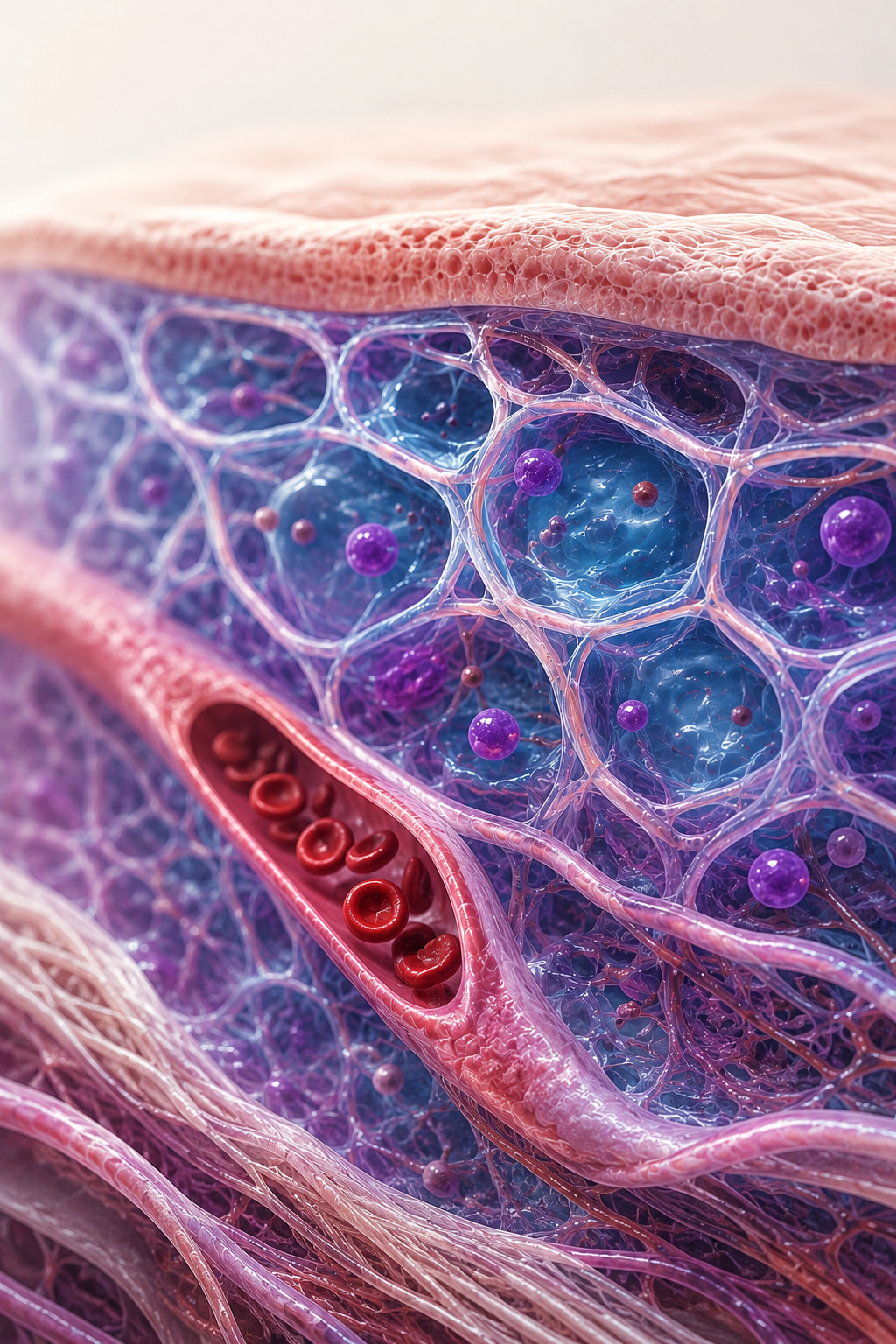
The Real Energy Crisis Happens Inside Your Cells
Every heartbeat, every thought, every breath, and every movement requires energy.
That energy is produced inside tiny structures within your cells called mitochondria.
Think of mitochondria as your body's energy generators.
When mitochondria are functioning properly, they convert nutrients and oxygen into cellular energy known as ATP (adenosine triphosphate).
When mitochondria become stressed or damaged, energy production declines.
The result?
You feel it as fatigue.
The question then becomes: what is impairing mitochondrial function?
The Forgotten Foundation: Healthy Cell Membranes
One of the most overlooked pieces of the fatigue puzzle is the health of the cellular membrane.
Every cell in your body is surrounded by a membrane made primarily of fats called phospholipids.
These membranes are not simply protective barriers. They are communication centers.
Cell membranes help:
- Allow nutrients into the cell
- Remove waste products
- Transfer information between cells
- Maintain electrical charge
- Support mitochondrial function
When cellular membranes become damaged, stiff, inflamed, or dysfunctional, communication begins to break down.
Imagine trying to charge your phone with a damaged charging cable.
The electricity is available, but the connection is poor.
Similarly, if cell membranes are not functioning optimally, the body's ability to create and utilize energy can suffer.
Energy Is More Than Calories
Many people think energy comes only from food.
While food is important, your body also relies on electrical processes to maintain health.
Every cell carries an electrical charge.
Your heart beats because of electrical signals.
Your nervous system functions through electrical communication.
Your mitochondria rely on electrical gradients to generate ATP.
Healthy cells maintain a specific membrane potential that helps drive energy production.
When that electrical charge becomes compromised, cellular performance can decline.
You may have plenty of nutrients available, yet still struggle to produce adequate energy.
This is one reason why fatigue is often much more complex than simply eating more calories or taking another supplement.
The Free Energy Sources Most People Ignore
So how can you support your electrical charge, your cellular membrane, your mitochondria?
One of the most exciting aspects of supporting energy production is that some of the most powerful tools are completely free.
Circadian Rhythm
Your body runs on an internal biological clock.
When your circadian rhythm is aligned, hormones, metabolism, digestion, detoxification, and energy production work more efficiently.
When circadian rhythms become disrupted through late-night light exposure, irregular sleep schedules, shift work, or excessive screen use, mitochondrial function can suffer.
Practical steps:
- Wake up at a consistent time
- Get outside within the first hour of waking
- Dim lights after sunset
- Reduce screen exposure before bed
- Prioritize regular sleep patterns
Sunlight
Sunlight is far more than a source of vitamin D.
Natural light helps regulate circadian rhythms, supports hormone signaling, influences mitochondrial function.
Morning sunlight is especially powerful because it helps anchor your biological clock for the rest of the day. There is a sweetness to the red light offered in sunrise and sunset that stimulate the mitochondria through the Cytochrome C Oxidase (CCO) enzyme complex which supports mitochondrial energy production.
Consider taking "sun snacks" throughout the day—short periods of outdoor light exposure that help reconnect your body with its natural environment.
Grounding
Grounding, also known as earthing, involves direct contact with the earth through bare feet on grass, soil, sand, or natural surfaces.
To be honest, when I first heard about grounding I thought that was way too "woo woo" for me and then someone graciously introduced me to the science behind it. I then tried it, and was sold! When my legs ache bad, I will stand in my yard for 20 minutes and the relief is quick! No ibuprofen needed anymore. Now I just need to move south, so I can ground every day!
Grounding can help support the body's electrical balance and reduce the physiological burden associated with modern living.
Want to learn more and dig into the studies this book is loaded with the all the goods. Earthing by Clint Ober
Could Technology Be Draining Your Battery?
Modern life exposes us to unprecedented levels of non-native electromagnetic fields (nnEMFs).
These include:
- Wi-Fi routers
- Cell phones
- Bluetooth devices
- Smart watches
- Wireless earbuds
- Smart home devices
- Cell towers
To be clear, technology is not going away.
The goal is not fear.
The goal is awareness.
Many researchers and practitioners are beginning to be able to support the idea that excessive nnEMF exposure may contribute to oxidative stress, cellular stress responses, and mitochondrial dysfunction.
If mitochondria are already struggling, additional stressors may further challenge energy production.
Reducing unnecessary exposure is a practical strategy with little downside.
Simple Ways to Reduce nnEMF Exposure
You do not need to move to a cabin in the woods. Although I won't blame you, if you want too!
Small changes can make a meaningful difference.
Consider:
- Turning Wi-Fi off at night
- Keeping your phone out of your pocket when possible
- Using speakerphone instead of holding the phone to your head
- Avoiding sleeping with devices next to your body
- Using wired internet connections when practical
- Taking regular breaks from screens
- Spending more time outdoors in natural environments
These simple habits may help reduce cumulative stress on the body while supporting healthier energy production.
The Bigger Picture
You don't have to live in a constant state of exhaustion. By learning how to work with my body instead of fighting against it, I now have more energy in my 40s than I did in my 20s.
Fatigue is not a deficiency of caffeine.
Fatigue is often a signal.
A signal that your cells are struggling to produce, manage, or utilize energy efficiently.
When we zoom out and look at the bigger picture, we begin asking different questions:
- How healthy are my mitochondria?
- Are my cellular membranes functioning properly?
- Is my circadian rhythm aligned?
- Am I getting enough natural light?
- Am I spending time grounded in nature?
- What hidden stressors may be draining my energy?
The good news is that energy is often far more recoverable than people realize.
Your body was designed to create energy. Your mitochondria want to work. Your cells want to heal. The question is whether they have the resources and environment they need to do their job well.
For many people, the biggest improvements come from mastering the foundations first: prioritizing sleep, aligning circadian rhythms, getting regular sunlight exposure, reducing unnecessary stressors, supporting nutrient status, moving the body, and creating an environment that allows the body to recharge rather than constantly run on empty.
But sometimes, despite doing all the "right things," fatigue persists.
When that happens, it may be time to look deeper.
One of the tools I use in my practice is bio resonance scanning as a wellness assessment tool to help identify areas of stress and imbalance that may warrant further exploration. While it is not a diagnostic test, it can provide valuable clues and help guide conversations about potential contributors to fatigue. Depending on the individual, those stressors may include unresolved infections, viral burdens, environmental exposures, heavy metals, nutrient imbalances, digestive challenges, immune stress, or other factors that can place additional demands on the body's energy reserves.
The goal is not to chase symptoms, but to better understand what may be interfering with the body's ability to produce and utilize energy efficiently.
If there is one thing I hope you take away from this article, it is this: fatigue is not a personality flaw, a lack of motivation, or something you should simply learn to live with.
Fatigue is information. It is your body's way of asking for attention and support.
Don't stop at "everything looks normal."
Keep asking questions.
Keep learning.
Keep digging.
Because sometimes the answers are there—you just haven't found the right place to look yet.
If you want help finding those answers- let's work together! I would be honored!
Some Resources for You:
Association of Mitochondrial Dysfunction and Fatigue. https://pubmed.ncbi.nlm.nih.gov/25147756/
Circadian Rhythms in Mitochondrial Respiration. https://pubmed.ncbi.nlm.nih.gov/29378772/
Circadian Clock NAD+ Cycle Drives Mitochondrial Oxidative Metabolism. https://pubmed.ncbi.nlm.nih.gov/24051248/
Circadian Coordination: Understanding the Interplay Between Circadian Clocks and Mitochondria
https://pubmed.ncbi.nlm.nih.gov/38721230/
Mitochondrial Dysfunction and Chronic Disease. https://pmc.ncbi.nlm.nih.gov/articles/PMC4566449/
The Effects of Grounding on Inflammation, the Immune Response, Wound Healing and Prevention
https://pubmed.ncbi.nlm.nih.gov/25848315/