Why Am I Retaining Water?
The Truth About Salt, Electrolytes, Heat,
Cortisol & Summer Swelling
I absolutely love this topic because it tackles one of the biggest areas of confusion in the health world:
"Am I retaining water because of salt?"
The answer is often "it's more complicated than that."
Last week I was reminded of something I teach my clients all the time...
Your body is always communicating.
The trick is learning its language.
During one of the hottest weeks we've had this summer, I noticed something frustrating.
I felt puffy.
Inflamed.
My rings were tighter.
My ankles looked swollen.
Yet I was spending hours outside sweating buckets.
I jokingly called it my "free summer sauna."
So why was I retaining water?
Like many practitioners, I immediately started asking questions.
Was this my kidneys?
Too much salt?
Too many electrolytes?
Stress?
Hormones?
Heat?
The scientist in me decided to run a little experiment.
I stopped my electrolyte supplement and relied only on homeopathic cell salts for several days.
At first...
The swelling seemed better.
Then my body started talking.
Day two...
My eye started twitching.
Day three...
Muscle cramps.
Day four...
Headaches.
Fatigue.
Zero motivation.
It became obvious my body was missing something.
I slowly added my electrolytes back.
Within a day the twitching disappeared.
The cramps vanished.
My energy returned.
Did I prove electrolytes caused my swelling?
Not at all.
Because something else had changed.
The weather cooled.
My stress settled.
My body wasn't fighting the same heat load anymore.
That little experiment reminded me of something incredibly important.
There Is Rarely One Cause
Health rarely comes down to one nutrient.
Or one supplement.
Or one lab marker.
Your body is managing hundreds of moving parts every second.
Fluid balance alone depends on:
- Temperature
- Sweat rate
- Sodium
- Potassium
- Magnesium
- Blood sugar
- Insulin
- Cortisol
- Kidney function
- Hormones
- Hydration
- Physical activity
Which is exactly why personalized nutrition matters.
Why Heat Makes You Swell
One of the biggest misconceptions is that swelling automatically means you ate too much salt.
Sometimes...
Maybe.
But often summer swelling has much more to do with physiology.
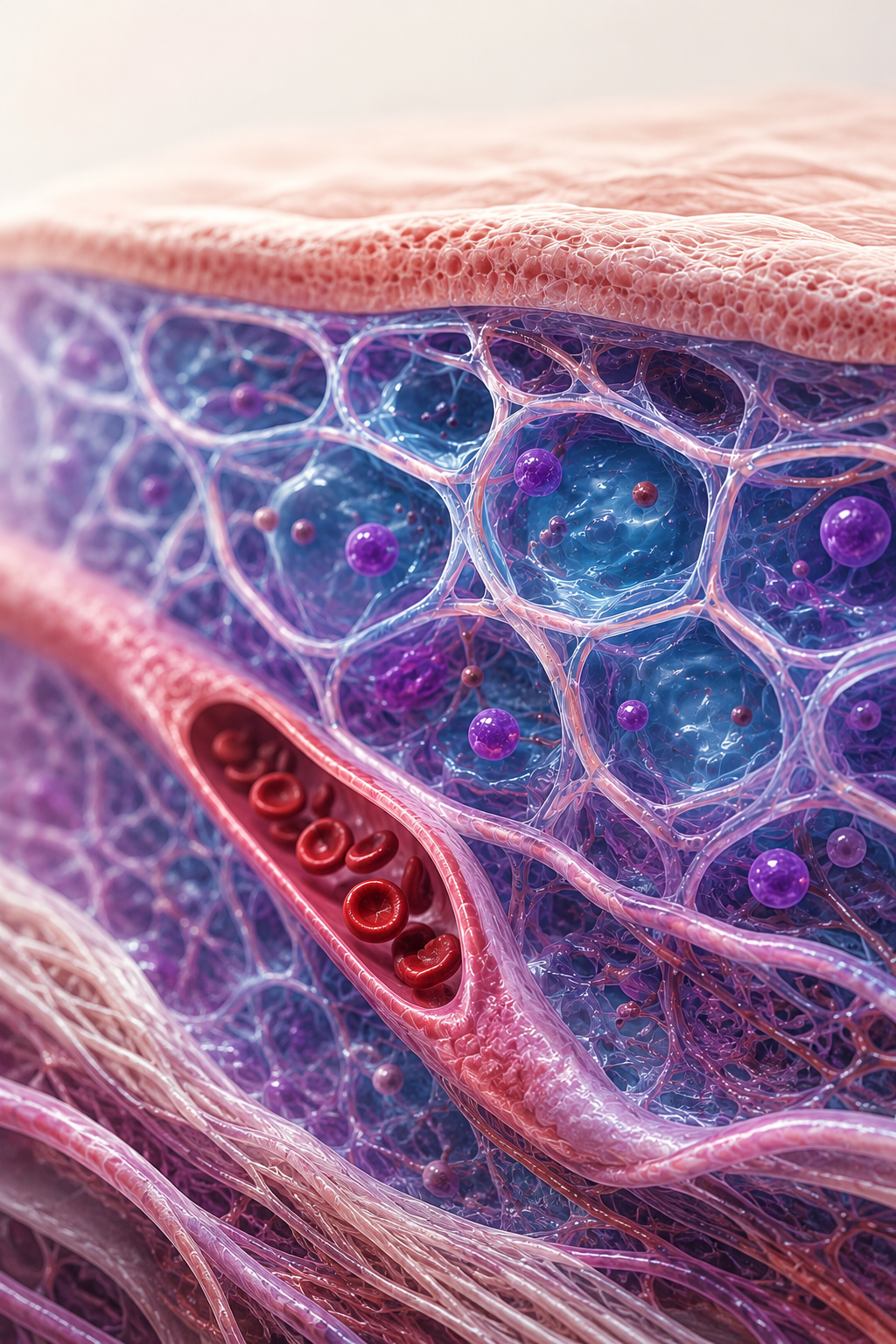
When your body gets hot, your blood vessels naturally dilate to release heat through your skin. This widening of blood vessels makes it easier for fluid to move into surrounding tissues, especially your feet, ankles, and hands. Gravity then does the rest. (MedlinePlus)
Heat can also increase fluid losses through sweating while simultaneously changing the hormones that regulate fluid balance. Depending on your hydration status, activity level, and electrolyte intake, this can look very different from person to person. (PMC)
Is Salt Really the Problem?
Salt has become one of nutrition's most misunderstood topics.
Our bodies require sodium.
Every nerve impulse...
Every muscle contraction...
Every heartbeat...
depends on it.
When we sweat, sodium is actually one of the primary minerals we lose. (PMC)
This is why some people exercising or working outside in extreme heat develop:
- muscle cramps
- headaches
- fatigue
- dizziness
- eye twitching
- reduced exercise performance
Those symptoms sounded awfully familiar to me.
But here's where it gets interesting.
Not everyone loses the same amount of sodium in sweat.
Some people are "salty sweaters."
Others conserve sodium extremely well.
Heat acclimation, genetics, diet, and training all influence how much sodium your sweat contains. (PubMed)
This is one more reason why copying someone else's electrolyte routine rarely works.
The Other Minerals Most People Forget
Sodium gets all the attention.
But it doesn't work alone.
Potassium
Potassium works inside the cell while sodium primarily works outside the cell.
Together they create the electrical gradients that allow nerves and muscles to function.
Low potassium may contribute to muscle weakness, fatigue, and cramping.
Magnesium
Magnesium participates in hundreds of enzymatic reactions throughout the body.
Deficiency may contribute to:
- muscle cramps
- eyelid twitching
- headaches
- fatigue
- poor stress tolerance
Chloride
Often overlooked, chloride partners with sodium to help maintain fluid balance and stomach acid production.
Your body isn't simply balancing one mineral.
It's orchestrating an entire mineral symphony.
The Insulin Connection
This is where things become fascinating.
Many people assume swelling equals too much salt.
In reality...
Insulin has a tremendous influence on sodium handling.
Insulin signals the kidneys to retain sodium. When insulin levels remain chronically elevated—as can occur with insulin resistance—the kidneys may retain more sodium and water, contributing to fluid retention in some individuals. (MedlinePlus)
This is one reason some people notice dramatic changes in water weight when improving metabolic health.
It isn't simply because carbohydrates disappeared.
Hormones regulating sodium and water are changing too.
How Stress Hormones Influence Water Retention
Stress doesn't just affect your mood.
It changes your physiology.
Cortisol helps us survive stressful situations.
In normal amounts, that's beneficial.
Chronically elevated cortisol, however, can influence blood pressure, fluid regulation, and sodium handling. Excess cortisol activity can promote sodium retention and potassium loss, especially when cortisol overwhelms the body's normal protective mechanisms. (NCBI)
This means a stressful week can absolutely look different on the scale.
Not because you suddenly gained body fat.
But because your body may be temporarily managing fluids differently.
Hydration Is More Than Drinking Water
Hydration is one of the most misunderstood topics in wellness.
Water alone isn't hydration.
Hydration means maintaining the proper balance of:
- water
- sodium
- potassium
- magnesium
- chloride
Too little water creates problems.
Too much plain water without replacing electrolytes can also become problematic in certain situations, particularly during prolonged sweating. (NCBI)
Your body is constantly seeking balance.
The Incredible Benefits of Sweating
One thing I don't want you to fear this summer is sweating.
Sweating is one of the body's brilliant cooling systems.
It also contributes modestly to eliminating certain waste products while supporting healthy temperature regulation. Sweat contains primarily water, along with sodium, chloride, potassium, urea, lactate, and trace amounts of some other compounds. (PMC)
Some benefits of healthy sweating include:
- Regulating body temperature
- Supporting circulation to the skin
- Eliminating small amounts of urea, metabolic byproducts, heavy metals, mold, micro/nano plastics, and more!
- Assisting with electrolyte turnover
- Promoting heat adaptation over time
It's important to remember that your liver and kidneys remain a few of your primary detoxification organs. Sweat supports one elimination pathway but is not your body's main detoxification system. (PMC)
What If You Don't Sweat?
Believe it or not...
That used to be me.
If you rarely sweat, even during exercise or hot weather, it's worth looking deeper.
Some common contributors include:
1. Poor hydration or electrolyte imbalance
Without enough fluid or minerals, the body may struggle to produce sweat efficiently.
2. Thyroid or metabolic dysfunction
Reduced metabolic activity can impair normal heat regulation.
3. Nervous system dysfunction or certain medications
Sweating is controlled by the autonomic nervous system. If signaling is impaired, sweating can decrease.
Your body was designed with multiple drainage pathways.
Sweating is one of them.
If that pathway isn't functioning well, ask why.
My Biggest Lesson
My experiment didn't prove that salt was good.
Or bad.
It reminded me that nutrition is rarely black and white.
The goal isn't to become afraid of salt.
Or obsessed with electrolytes.
The goal is to become a student of your own body.
You have permission to experiment.
To observe.
To adjust.
To learn.
Because every season, every stressor, every stage of life changes what your body needs.
That isn't frustrating.
It's freeing.
The more you listen, the more clearly your body communicates.
And that's where real healing begins.
A few more reference for those of you who like the science stuff!
- National Library of Medicine. Fluid Imbalance (MedlinePlus). (MedlinePlus)
- Centers for Disease Control and Prevention (CDC/NIOSH). Heat-Related Illnesses. (CDC)
- Baker LB. Physiology of Sweat Gland Function: The Roles of Sweating and Sweat Composition in Human Health. Comprehensive Physiology. (PMC)
- McCubbin AJ, et al. Exertional Heat Stress and Sodium Balance. Autonomic Neuroscience. (PubMed)
- NCBI Bookshelf. Physiology, Cortisol. (NCBI)
- National Library of Medicine. Exercise-Associated Hyponatremia. (NCBI)
- CDC/NIOSH. Heat Cramps and Heat Illness Prevention. (CDC)
- Armstrong LE, Costill DL, Fink WJ. Changes in Body Water and Electrolytes During Heat Acclimation. (PubMed)
Medical Disclaimer
The information shared in this article is intended for educational and informational purposes only and reflects current scientific research along with my professional perspective as a Nutritional Therapy Practitioner. It is not intended to diagnose, treat, cure, or prevent any disease, nor should it be considered a substitute for personalized medical advice, diagnosis, or treatment.
Every individual is unique. Nutritional needs, supplement recommendations, and lifestyle strategies should be tailored to your personal health history, current medications, and medical conditions. Always consult your physician or another qualified healthcare professional before making significant changes to your diet, supplements, exercise routine, or healthcare plan.
While I strive to provide accurate, evidence-informed information, research is continually evolving. The goal of this article is to empower you with knowledge so you can ask better questions, better understand your body's signals, and partner with your healthcare team in making informed decisions about your health.